
Introduction
Email marketing remains one of the most reliable and cost-effective digital marketing channels available to businesses today. Despite the rise of social media platforms, instant messaging, and paid advertising, email continues to deliver consistent engagement, strong customer relationships, and measurable returns on investment. However, many businesses struggle to achieve these results because of common email marketing mistakes that reduce effectiveness, damage trust, and limit long-term success.

Many businesses struggle with email marketing not because the channel is ineffective, but because they repeat the same fundamental errors. These email marketing mistakes often stem from a lack of understanding of best practices, misuse of automation tools, or failure to analyze performance data. This article examines the most common email marketing mistakes in detail, focusing on spam practices, poor subject lines, lack of segmentation, and ignoring analytics. By understanding these errors and learning how to avoid them, marketers can significantly improve their email campaign performance.
Understanding Email Marketing Mistakes
Email marketing mistakes occur when campaigns fail to respect audience expectations, technical standards, or strategic goals. These mistakes can lead to low open rates, high unsubscribe rates, poor conversions, and spam complaints. Unlike other marketing channels, email marketing requires a careful balance between personalization, frequency, relevance, and compliance.
The most damaging mistakes are often repeated over time, compounding their negative impact. When businesses fail to correct these errors, email lists degrade, deliverability suffers, and trust is lost. Recognizing these mistakes early is essential for long-term success.
Spam Practices in Email Marketing
Definition of Spam in Email Marketing
Spam refers to unsolicited, irrelevant, or excessive email messages sent to recipients without proper consent. In email marketing, spam practices violate user trust and often breach email regulations such as CAN-SPAM, GDPR, and other data protection laws. Spam emails are not only unethical but also harmful to sender reputation.
Spam practices are one of the most serious email marketing mistakes because they affect deliverability. Once an email sender is flagged as spam, future campaigns may be blocked entirely by email service providers.
Buying or Renting Email Lists
One of the most common spam practices is purchasing or renting email lists. These lists often contain outdated, invalid, or unconsented email addresses. Sending emails to such lists leads to high bounce rates, spam complaints, and blacklisting.
Email marketing should always rely on permission-based lists. Subscribers must willingly opt in to receive communications. Purchased lists undermine the foundation of trust that email marketing depends on.
Sending Emails Without Consent
Another serious mistake is sending marketing emails to individuals who never subscribed. Even if contact information was collected through offline events or business cards, explicit permission is still required. Failure to obtain consent results in low engagement and legal risks.
Permission-based marketing ensures that recipients expect and value the emails they receive.
Excessive Email Frequency
Sending emails too frequently is another spam-related issue. Over-messaging overwhelms subscribers and increases unsubscribe rates. Many businesses mistakenly assume that more emails equal more conversions, but excessive frequency often has the opposite effect.
A balanced sending schedule improves engagement and maintains subscriber interest.
Misleading Content and Clickbait
Spam practices also include misleading content, false promises, and deceptive offers. Emails that exaggerate benefits or hide critical information erode trust and damage brand credibility.
Transparency and honesty are essential in maintaining a healthy email relationship.
Poor Subject Lines
Importance of Subject Lines
The subject line is the first element a recipient sees when an email arrives in their inbox. It plays a critical role in determining whether the email is opened or ignored. Poor subject lines are among the most costly email marketing mistakes because they directly impact open rates.
Even the most valuable email content fails if the subject line does not capture attention or convey relevance.
Common Subject Line Mistakes
Many marketers rely on generic, vague, or overly promotional subject lines. Phrases such as “Don’t Miss This” or “Special Offer Inside” lack specificity and fail to communicate value.
Another common error is using spam-trigger words such as “free,” “guaranteed,” or excessive punctuation. These words increase the likelihood of emails being filtered into spam folders.
Lack of Personalization
Personalization in subject lines significantly improves open rates. Failing to use basic personalization, such as the recipient’s name or behavioral context, makes emails feel impersonal and generic.
Modern email tools allow dynamic personalization that should not be ignored.
Subject Lines That Do Not Match Content
When subject lines promise content that the email does not deliver, trust is broken. Misaligned subject lines increase unsubscribe rates and reduce long-term engagement.
Consistency between subject line and email body is essential for credibility.
No Segmentation in Email Marketing
What Is Email Segmentation?
Email segmentation is the process of dividing an email list into smaller groups based on shared characteristics such as behavior, demographics, or purchase history. Lack of segmentation is one of the most damaging email marketing mistakes.
Without segmentation, all subscribers receive the same message, regardless of relevance.
Consequences of No Segmentation
Sending the same email to all subscribers leads to poor engagement. New subscribers, loyal customers, and inactive users have different needs, and treating them the same reduces effectiveness.
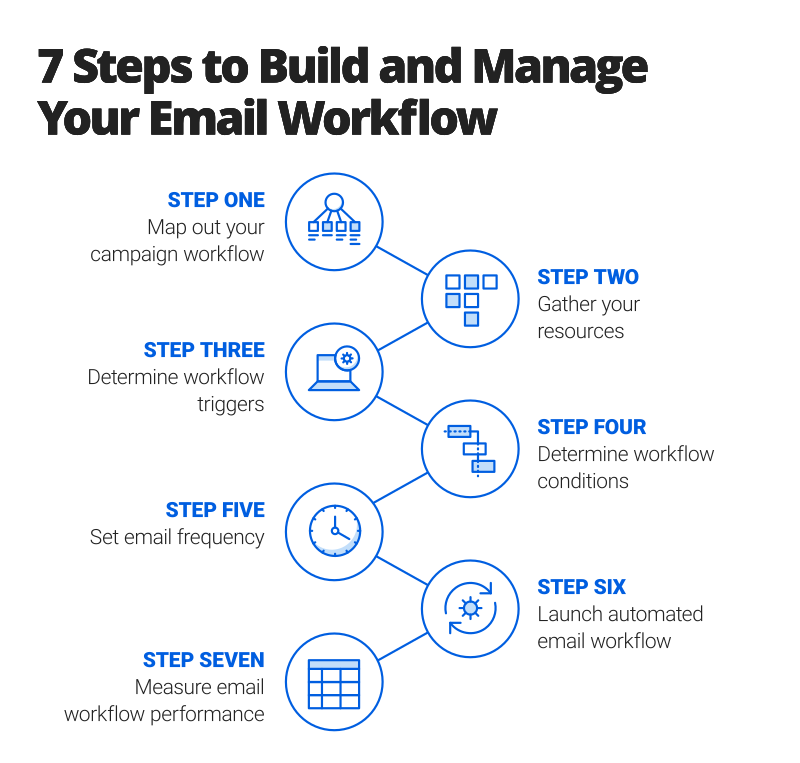
Unsegmented campaigns often result in higher unsubscribe rates and lower conversion rates.
Types of Segmentation Marketers Ignore
Many marketers fail to segment based on:
- Subscriber lifecycle stage
- Purchase behavior
- Email engagement history
- Geographic location
Ignoring these segmentation opportunities wastes valuable data that could improve targeting.
Benefits of Proper Segmentation
Segmented campaigns consistently outperform non-segmented campaigns. They deliver higher open rates, click-through rates, and conversions by ensuring relevance.
Segmentation allows marketers to communicate more effectively with diverse audiences.
Ignoring Email Marketing Analytics
Importance of Analytics in Email Marketing
Analytics provide measurable insights into campaign performance. Ignoring analytics is a critical email marketing mistake because it prevents optimization and growth.
Email marketing is one of the most measurable channels, yet many businesses fail to analyze available data.
Key Metrics Often Ignored
Commonly ignored metrics include:
- Open rates
- Click-through rates
- Bounce rates
- Unsubscribe rates
- Conversion rates
Each metric provides insight into subscriber behavior and campaign effectiveness.
Failure to Use Data for Improvement
Collecting data without acting on it is another mistake. Analytics should inform decisions about content, frequency, timing, and segmentation.

Without data-driven optimization, email campaigns stagnate.
Long-Term Impact of Ignoring Analytics
Ignoring analytics leads to repeated mistakes and declining performance. Over time, engagement drops, deliverability worsens, and revenue opportunities are lost.
Successful email marketing requires continuous monitoring and adjustment.
How to Avoid Common Email Marketing Mistakes
Avoiding these mistakes requires a strategic and disciplined approach. Businesses should focus on permission-based list building, clear subject lines, audience segmentation, and consistent performance analysis.
Email marketing should be treated as a long-term relationship, not a short-term sales tactic.
Best Practices for Sustainable Email Marketing
Sustainable email marketing prioritizes value, relevance, and trust. Marketers should respect subscriber preferences, comply with regulations, and continuously refine strategies using analytics.
Investing time in proper setup and ongoing optimization produces compounding results.
Conclusion
Email marketing remains a powerful tool when executed correctly. However, common email marketing mistakes such as spam practices, poor subject lines, lack of segmentation, and ignoring analytics can significantly reduce effectiveness. These mistakes are often preventable with proper planning, ethical practices, and data-driven decision-making.
By avoiding spam behaviors, crafting relevant subject lines, segmenting audiences, and analyzing performance metrics, businesses can build stronger relationships with subscribers and achieve sustainable growth. Email marketing success is not about sending more emails, but about sending the right emails to the right people at the right time.